
 Back
Back


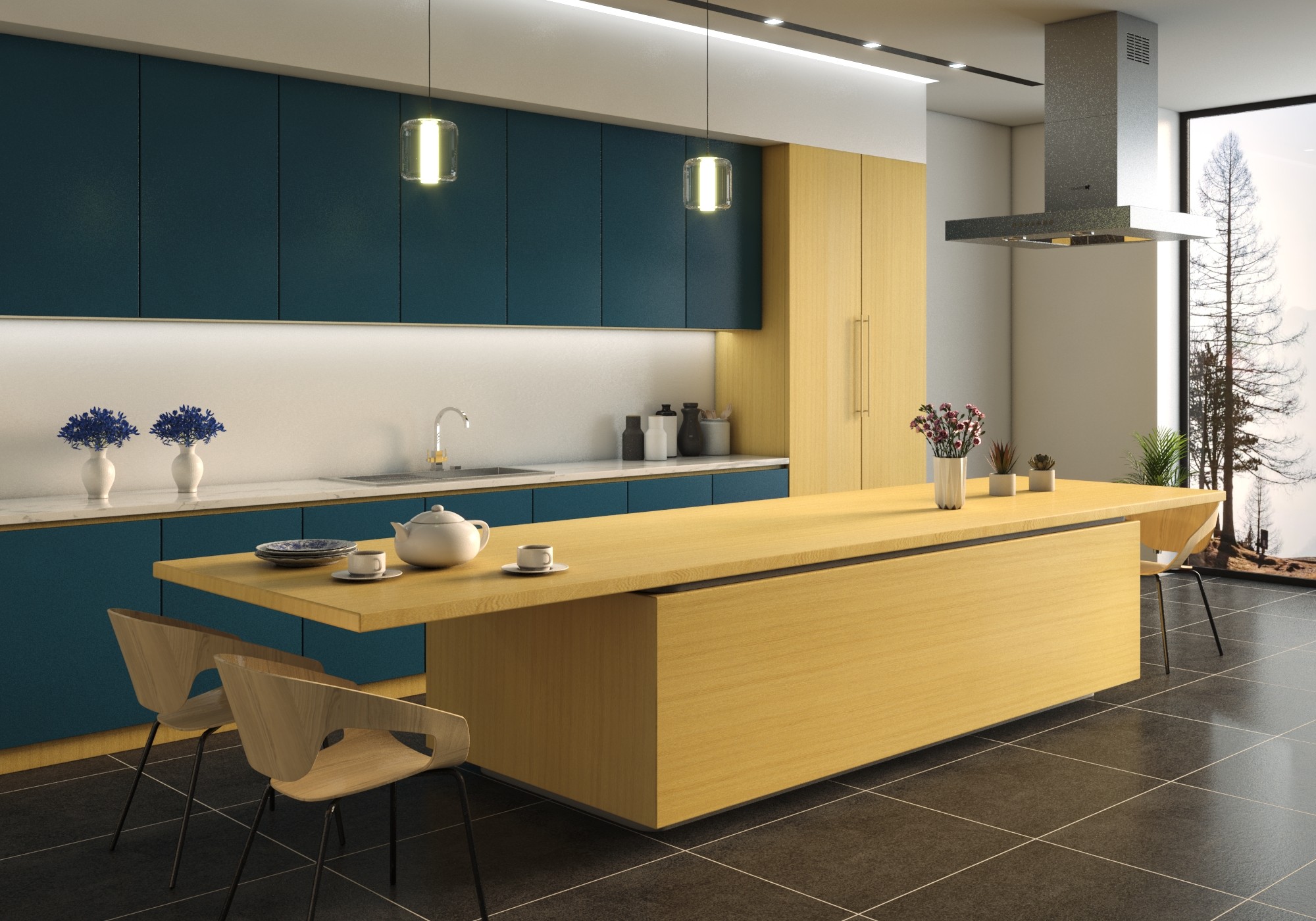
When you’re buying materials for furniture, cabinetry, or interior design, prelaminated particle board, or melamine-faced chipboard, can be a cost-effective and versatile option. Unlike plain particle boards that require additional lamination or polishing, prelaminated particle boards come with a ready-to-use decorative surface, making them faster and more convenient for interior applications. However, for those new to the market, understanding how to judge their quality can feel confusing. From density and surface finish to emission standards and sustainability, several factors determine whether a board will last for years or start to deteriorate within months. This article will help you recognise the key indicators of a high-quality board and make informed choices that deliver durability, design consistency, and long-term value.
The first indicator of quality in a laminated particle board is density. Denser boards are stronger, more compact, and less likely to sag or crack under pressure. If a board feels very light, it may contain too much air space or loosely packed wood chips, which weakens its structural integrity.
A board with superior density offers better screw-holding strength, especially important for furniture joints and fittings. You can often gauge density by simply lifting the sheet or tapping it; solid boards sound and feel firm. Leading manufacturers ensure density consistency across the board through advanced systems such as the Continuous Press System (CPS), which facilitates even compaction during production.
The surface of a prelaminated board tells you a lot about its quality. Look for a smooth, uniform finish without bubbles, ripples, or rough spots. A well-made board will have a clean, scratch-resistant melamine surface and sharp, well-sealed edges.
Gently run your hand across the surface: if it feels uneven, the lamination might not have bonded properly. When cut, quality boards leave crisp edges without chipping. The best manufacturers use precise temperature and pressure control during lamination to achieve a flawless finish and ensure that decorative layers don’t peel or warp over time.
Quality assurance comes from independent testing and certification. Always check whether the boards carry recognised national and international certifications, such as:
When a board displays these marks, it means the manufacturer adheres to consistent quality and health-safety standards recognised worldwide.
The way a board is manufactured has a direct impact on its strength and stability. High-end producers use Continuous Press Systems (CPS or CPS+), which allow uniform pressure and temperature across the board, resulting in consistent thickness and superior bonding.
Older single-daylight or batch presses may produce boards with uneven density or weak bonding between the core and surface. Boards made on CPS+ lines also show fewer imperfections and better moisture resistance.
If you’re evaluating a supplier, ask about their production process. A manufacturer using modern continuous press automation is far more likely to deliver boards with lasting reliability and smoother surfaces.
One of the biggest threats to particle boards is moisture, especially when being used in humidity-prone environments. Low-quality boards absorb water quickly, leading to swelling, delamination, or fungal growth. Always check whether the product is rated for moisture resistance if humidity is a concern in your project.
A simple visual cue is edge sealing: well-sealed edges provide better protection against humidity. Some buyers test by placing a small droplet of water on the surface; if it absorbs instantly, the board’s protection is weak.
Most importantly, for reliable performance, look for the right grade:
Boards made with quality resins and pressed consistently maintain their dimensional stability and resist moisture effectively, even under challenging conditions.
Read Also: Advantages of Melamine Faced Chipboard (MFC): Why It Has Become a Modern Furniture Essential
To the untrained eye, all boards may look similar, but the difference lies in their core composition. Turn a sample sideways and inspect the cross-section. The wood chips should appear evenly distributed, with no large gaps or powdery areas.
A uniform core ensures consistent strength and prevents weak points that can lead to cracks. Manufacturers using modern screening and blending technology achieve an even particle size, which directly enhances the mechanical performance of the board.
Uniform cores also provide better anchoring for screws and minimise splintering during cutting and assembly, which is a key factor for furniture manufacturers and carpenters.
A major advantage of prelaminated particle boards is the decorative finish already applied to the surface. High-quality boards use European-grade decorative papers and foils that replicate natural woodgrain or solid-colour finishes beautifully.
Boards with 100% European decor are especially valued for their design precision and long-lasting aesthetics. They maintain visual appeal even in high-traffic interiors and commercial environments.
Good furniture materials not only last long but also maintain a healthy indoor environment. This is why E1 and E2 emission standards or CARB P2 certification are crucial. These ratings measure the release of formaldehyde, a common chemical in wood-based products, ensuring it stays well below harmful levels.
Boards that meet these standards contribute to better air quality and sustainability goals. If you’re selecting boards for residential interiors, especially bedrooms or schools, these emission credentials are non-negotiable.
Reputable brands stand behind their product quality. Always check if the manufacturer offers a warranty against manufacturing defects such as delamination, warping, or surface peeling. A multi-year warranty signals confidence in product durability and gives you peace of mind.
After-sales support also matters. Reliable manufacturers assist with technical specifications, thickness and density options, and advice for proper handling and installation. For large-scale interior projects or modular furniture production, this professional support can save both time and cost.
Sustainability is now a core expectation rather than a bonus. Many top manufacturers follow a zero-waste design or cradle-to-cradle approach, meaning every material that goes into making the board is reused or recycled within the process.
Such plants use energy-efficient presses, water recycling systems, and dust-collection units to minimise their environmental footprint. Opting for these products not only helps the planet but also aligns your project with green-building certifications and eco-friendly design goals.
Read Also: What is Melamine Faced Chipboard (MFC) and Why It’s Replacing Traditional Boards in Modern Interiors
Ready to choose boards that set the standard in quality and design? Discover Greenlam MFC. Greenlam MFC represents the next generation of prelaminated particle boards, engineered for strength, precision, and long-term performance. The range includes MFC Universal and MFC Studio, available in Core, Core+, and HMR variants, each designed to deliver superior density, smooth surface finishes, and lasting durability. Easy to mill, fabricate, and install, Greenlam MFC boards are ideal for a wide range of furniture, interior, and architectural applications. To know more, call 1800-833-0004, email info@greenlammfc.com, or visit our contact page.
Check its density, surface smoothness, and certification marks such as BIS, CARB P2, or E1/E2. Uniform weight and a bubble-free surface are good indicators of quality.
Yes, high-quality boards made using continuous press technology are durable and dimensionally stable. However, they must be installed and maintained properly to prevent moisture damage.
CARB P2 is a certification issued by the California Air Resources Board, confirming that the board meets strict limits on formaldehyde emissions for safer indoor air quality.
Both represent emission grades defined by European standards. E1 boards emit very low formaldehyde levels, while E2 allows slightly higher but still safe levels. For residential spaces, E1 boards are generally preferred.
You can check by placing a few drops of water on the surface; if it absorbs quickly or the surface bubbles, the board may not be moisture-resistant. Always look for manufacturer specifications and MFC grades to determine moisture protection.
Density determines strength, screw-holding capacity, and resistance to bending. Dense boards last longer and maintain stability in furniture construction.
They can be, if produced using low-emission resins and zero-waste manufacturing systems. Always look for eco-certifications such as CARB P2, E1/E2, or FSC-certified raw materials.