
 Back
Back


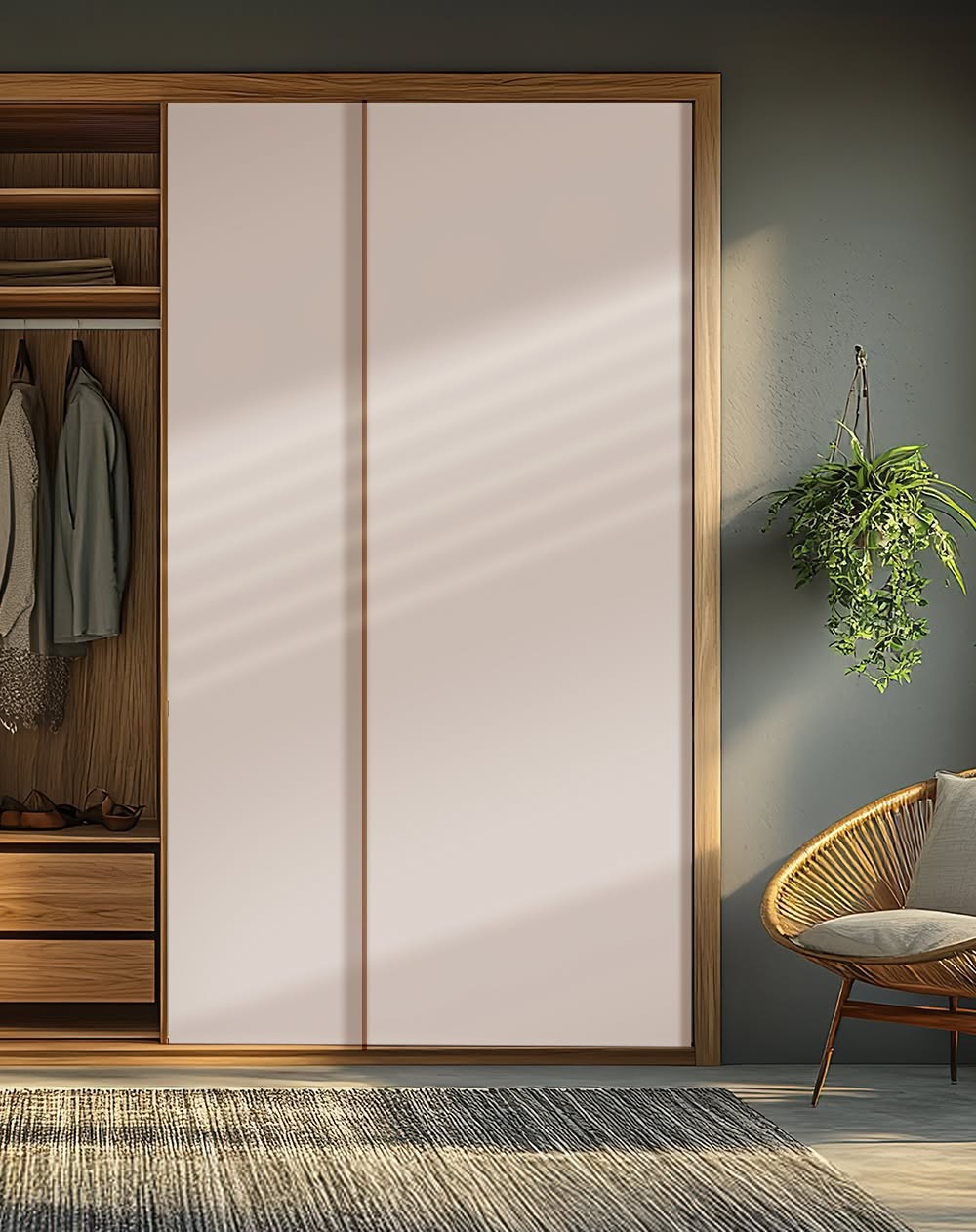
Furniture design has long faced a challenge: balancing aesthetic appeal, structural durability, and manufacturing efficiency within timelines and budgets. Traditional materials struggle to meet all these expectations simultaneously – either slowing down production, increasing costs, or complicating consistency across large projects. Melamine-faced chipboard (MFC) offers a clear solution to these pressures. Engineered as a ready-to-use material with reliable strength and visual versatility, MFC has become a cornerstone in modern modular furniture manufacturing. From wardrobes and cabinets to workstations and room partitions, MFC offers a practical, scalable solution for building more, with less time, less waste, and greater precision. This article explores the advantages of Melamine-Faced Chipboard (MFC) and why it plays a defining role in modern furniture manufacturing.
Melamine-Faced Chipboard (MFC), sometimes called melamine chipboard or melamine-coated board, is an engineered wood panel created by bonding decor paper impregnated with melamine resin onto a chipboard core under heat and pressure. The process produces a pre-finished surface that is highly durable, scratch and stain-resistant, uniform in colour and design, and easy to machine and install. Because the decorative finish is fused directly onto the board, MFC eliminates the need for post-lamination, polishing, or painting.
A clear understanding helps designers and buyers choose the right material for each application.
MFC vs MDF
MFC vs Plywood
Related : What is Melamine Faced Chipboard (MFC) and Why It’s Replacing Traditional Boards in Modern Interiors
MFC’s popularity is rooted in its balanced combination of strength, convenience, and aesthetic flexibility. It brings together the practical benefits of a ready-to-use material with the visual quality expected in contemporary furniture.
As MFC boards are pre-laminated in a controlled factory environment, they arrive fully finished with a consistent melamine-coated surface. It eliminates the need for post-lamination or polishing, reducing production time, labour dependency, and the risk of on-site inconsistencies, making MFC ideal for fast-track or large-scale projects.
The melamine surface forms a hard, non-porous layer that naturally resists:
These combined advantages of MFC ensure long-lasting performance even in demanding residential and commercial environments.
Melamine chipboard is manufactured in an extensive range of decors, including:
The versatility allows designers to achieve cohesive interior styles, whether classic, contemporary, or minimalist, without the cost or upkeep of natural materials.
MFC offers excellent value because it reduces both initial fabrication costs and long-term expenses. The melamine finish closely mimics natural materials that are typically more expensive. Also, with MFC, there’s no need for lamination, polishing, or finishing, which lowers labour and installation costs.
In addition to being more cost-effective upfront, MFC is highly cost-effective over its lifecycle. Its melamine-coated surface requires minimal maintenance, resists scratches and stains, and rarely needs refinishing, helping manufacturers and end users save significantly on upkeep and replacement costs.
While melamine-faced chipboard is often perceived as a lightweight material, it offers dependable structural strength for everyday furniture. Its engineered core ensures uniform density, providing stable support for shelving, wardrobe carcasses, cabinets, and worktops.
When the appropriate thickness (e.g., 18 mm or 25 mm) is selected, MFC delivers excellent load-bearing performance, making it suitable for both residential and commercial furniture installations.
One of the biggest advantages of MFC in modular manufacturing is its high level of consistency. Unlike natural materials that vary in grain, colour, or density, MFC offers uniformity in:
This consistency ensures that large projects, such as full kitchens, hotel wardrobes, or corporate workstations, maintain a unified aesthetic. For factories, this repeatability reduces waste, improves cutting accuracy, and streamlines batch production.
Precision in density allows MFC to hold screws, hinges, and fittings securely. This makes it well-suited to:
This compatibility ensures smoother installation, better alignment, and long-term operational stability, which is especially important in high-use environments such as offices and retail interiors.
Owing to its consistent density and structural uniformity, MFC performs exceptionally well during:
This machining efficiency makes MFC a preferred choice for factories producing mass furniture ranges with tight timelines.
The melamine-coated board surface is smooth and non-absorbent, enabling:
This low-maintenance advantage is particularly valuable for chipboard furniture used in offices, kitchens, bedrooms, and children’s rooms.
Modern melamine-faced chipboards, like those from Greenlam MFC, are increasingly produced using sustainably sourced wood fibres and low-emission resins (E0/E1). This supports healthier indoor air quality and reduces the environmental footprint, aligning MFC with the growing shift toward responsible, future-ready material choices.
MFC is used across residential, commercial, and institutional environments due to its versatility. Common applications include:
General chipboard furniture used in living rooms and bedrooms
HMR MFC is particularly preferred for kitchen shutters and wardrobes in humid zones.
Selecting the right melamine-faced chipboard is not only about design; it directly affects performance, longevity, and user experience. Before finalising your MFC, it is essential to consider the following factors to ensure the board delivers the durability and finish you expect from your furniture and fixtures.
Different applications require different board thicknesses. Common options range from 9 mm to 25 mm, with thinner boards suitable for shutters or drawer bottoms, while thicker boards provide structural integrity for carcasses, shelves, and partitions.
The right thickness ensures the melamine-coated board remains stable under load and maintains long-term performance.
MFC is available in a wide array of decors, so choosing the right finish should complement the broader interior story. Consider:
The versatility of MFC makes it easy to achieve cohesion across rooms.
Not all MFC boards are equal. A higher-density core provides:
Equally important is a high-quality melamine coating, which enhances surface durability, decor clarity, and resistance to scratches or stains.
The way MFC is assembled significantly influences its lifespan. Good-quality edge banding prevents moisture ingress, protects corners from chipping, and elevates the final aesthetic. Compatible hardware ensures smoother functioning of shutters, drawers, and sliding systems, especially in high-use cabinetry.
Greenlam MFC elevates melamine-faced chipboards beyond standard functionality by integrating world-class engineering, contemporary design, and reliable performance. Every board is manufactured to provide long-term value, consistency, and visual harmony in modern interiors.
Greenlam MFC is engineered for robust performance through:
This combination results in an MFC board that performs reliably across residential, commercial, and hospitality applications.
Greenlam offers one of the most extensive decor libraries in the country, including:
This ensures that MFC seamlessly fits into contemporary design trends.
Greenlam offers a structured MFC portfolio designed to suit varied application needs and moisture conditions.
The range includes MFC Core for standard dry environments, MFC Core+ for enhanced durability in semi-humid areas, and MFC HMR (High Moisture Resistant) grades for spaces exposed to higher humidity.
These are organised into two collections: the MFC Universal Range (featuring MFC Core) and the MFC Studio Range (featuring Core, Core+, and HMR options), ensuring the right match for every furniture and interior requirement.
Greenlam’s manufacturing strength lies in precision, automation, and process consistency:
The result: MFC panels with predictable quality, reliability, and longevity.
Greenlam supports designers, fabricators, and OEMs through:
With its blend of strength, beauty, affordability, and hygiene-friendly performance, Greenlam Melamine Faced Chipboard (MFC) is an excellent choice for modular furniture and fixtures.
Modern interiors demand materials that are efficient, durable, and environmentally responsible. Greenlam MFC is engineered to meet expectations, combining advanced manufacturing with sustainable sourcing and versatile design aesthetics. Greenlam MFC is available in two specialised collections: Universal and Studio, offering options suited for both dry and humid environments, including moisture-resistant (HMR) grades for added reliability. Whether you are specifying materials for residential, commercial, or large-scale modular projects, Greenlam provides dependable performance backed by robust technical expertise. For product enquiries, bulk orders, dealer partnerships, or project consultations, please call us at 1800-833-0004 or email us at info@greenlammfc.com. You can also visit our contact form. Our team will be happy to support you with the right solutions for your requirements.
Laminate sheets are surface layers applied on MDF or plywood, while MFC combines the substrate and melamine finish in a single ready-to-use board.
Yes. The HMR grade in the MFC Studio Range offers enhanced moisture resistance suitable for wardrobes and kitchen cabinets.
It is designed to resist scratches, stains, heat, and daily wear, ensuring long-lasting performance.
Some of the reasons to choose MFC for cabinets, wardrobes, and other furniture include the ease of fabrication, cost efficiency, visual variety, durability, and consistency.
Greenlam MFC is commonly available from 9 mm to 25 mm, depending on the application.
Yes. Greenlam MFC offers low-emission pre-laminated boards manufactured using sustainable processes.
Contact your nearest Greenlam MFC authorised dealer, distributor, or sales representative for authentic, high-grade MFC boards.