
 Back
Back


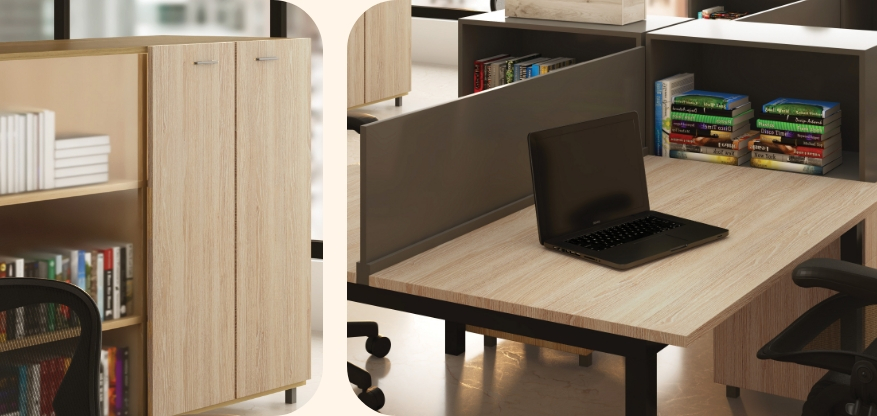
Prelaminated particle board, or melamine-faced chipboard, has become a widely used material in modern furniture and interior applications. It combines the functional strength of particle board with a ready-finished decorative surface, making it suitable for residential and commercial use across wardrobes, cabinets, workstations, and shelving. However, not all prelaminated particle boards offer the same level of quality and performance. Factors such as surface finish, density, emission levels, and manufacturing standards play a significant role in how a furniture board performs over time. In this article, we will outline the key considerations to help you choose the right melamine chipboard for your furniture needs.
Prelaminated particle board, also known as melamine-faced chipboard (MFC), consists of a core made from wood particles bonded together using resin under controlled pressure and temperature. This core is then surfaced with melamine-impregnated decorative paper, which provides a finished look without requiring additional laminates or paint.
This structure makes it a ready-to-use material that simplifies furniture manufacturing. It is commonly used in modular furniture, wardrobes, cabinets, and shelving systems. Leading particle board manufacturers produce these boards in various grades to suit different applications, ensuring flexibility in both design and performance.
The growing use of prelaminated particle board in furniture is driven by its balance of efficiency, consistency, and design flexibility. It offers advantages that make it suitable for a wide range of interior applications.
One of the primary benefits is its ready-finished surface, which reduces the need for additional processing. This saves time during furniture production and ensures a consistent finish across multiple components. It also makes the material more cost-effective compared to alternatives that require additional laminates or coatings.
Another advantage is the availability of diverse melamine board colours and textures. From woodgrain patterns to solid colours and abstract finishes, prelaminated particle board supports a wide range of design preferences. This makes it an ideal choice for modern interiors where both functionality and aesthetics are important.
Read Also: How to Choose and Check the Quality of Prelaminated Particle Boards
Selecting the right prelaminated particle board requires a detailed evaluation of multiple factors. Each of these influences the durability, safety, and long-term performance of particle board furniture.
The surface of a prelaminated particle board plays a crucial role in its performance and appearance. The melamine-impregnated paper layer must be properly processed to ensure durability.
High-quality impregnation improves resistance to scratches, stains, and everyday wear. It also ensures that the surface retains its finish over time without fading or peeling. This is especially important for particle board furniture that is used frequently, such as wardrobes, study tables, and storage units.
Design flexibility is one of the key reasons for choosing prelaminated particle boards. The availability of a wide range of melamine board colours allows homeowners and designers to achieve different aesthetic outcomes.
Options typically include woodgrain finishes for a natural look, solid colours for contemporary spaces, and textured patterns for added visual interest. Selecting the right design ensures that the furniture integrates well with the overall interior theme.
The density of a particle board directly affects its strength and durability. Boards with higher and more uniform density offer better structural performance.
Advanced manufacturing processes used by reliable particle board manufacturers, like Greenlam MFC, ensure even distribution of particles within the board. This improves screw holding capacity, stability, and load-bearing ability. For furniture that requires durability, such as wardrobes and shelving units, density is a critical factor.
Thickness is one of the most practical factors to consider when selecting a prelaminated particle board. Different applications require different board thicknesses.
Common options include 9 mm, 12 mm, 16 mm, 18 mm, and 25 mm. Thinner boards are suitable for lightweight applications such as back panels, while thicker boards provide the strength required for shelves, cabinets, and structural furniture components. Choosing the right thickness ensures that the furniture performs as expected.
Edge quality is often overlooked but plays a significant role in the final finish of furniture. Clean and dense edges allow proper adhesion of edge bands, which are used to seal and protect exposed sides.
Poor edge quality can result in chipping, weak joints, and an uneven finish. High-quality prelaminated particle board ensures smoother edges, which contribute to better aesthetics and durability in finished furniture.
While particle boards are not inherently waterproof, some boards offer improved resistance to moisture. This is an important consideration depending on where the furniture will be used.
For areas such as kitchens, utility spaces, or regions with high humidity, selecting boards with better moisture resistance, such as Grade I, helps prevent swelling and damage. Understanding the usage environment allows you to choose chipboard sheets that are suitable for long-term performance.
Indoor air quality is an important consideration when choosing materials for furniture. Particle board is manufactured using resins that may release formaldehyde, which can affect indoor environments if not controlled.
It is important to select boards that meet low emission standards, such as E1 & E2. Certified low-emission chipboard sheets are designed to minimise the release of harmful substances, making them safer for residential use. This is particularly relevant for bedrooms, living spaces, and areas where people spend extended periods of time.
Prelaminated particle board is generally considered a cost-effective material. However, selecting the lowest-priced option may not always deliver the best results.
Higher-quality boards offer better durability, reduced maintenance, and longer lifespan. Evaluating the balance between price and performance ensures that the investment provides value over time rather than leading to early replacement or repairs.
The quality of prelaminated particle board largely depends on the standards followed by the manufacturer. Choosing reliable particle board manufacturers, such as Greenlam MFC, ensures consistency in both material and finish.
Key aspects to consider include certifications, quality control processes, and product range. Established manufacturers invest in advanced technology and testing, which results in better-performing boards suitable for a wide range of applications.
Read Also: Advantages of Melamine Faced Chipboard (MFC): Why It Has Become a Modern Furniture Essential
Greenlam MFC offers next-generation prelaminated particle board solutions designed to meet the evolving needs of modern furniture and interiors. Built on a wood-based core, these chipboard sheets are available for both dry and humid environments, making them suitable across a wide range of residential and commercial applications.
The range is developed to balance performance with design flexibility, offering a wide selection of melamine board colours and finishes that support diverse furniture requirements. From wardrobes and cabinetry to modular particle board furniture, Greenlam MFC is designed to deliver consistency in both structure and surface. With certifications such as BIS and CARB P2, Greenlam MFC meets recognised standards for quality, low emissions, and health safety. This makes it a dependable choice for projects where durability, indoor air quality, and long-term performance matter.
For those looking for reliable prelaminated particle boards backed by strong manufacturing standards, Greenlam MFC presents a solution that brings together functionality, sustainability, and design in a single offering. For product inquiries, please call us at 1800-833-0004 or email us at info@greenlammfc.com. You can also visit our contact form. Our team will be happy to support you with the right solutions for your requirements.
High-quality chipboard sheets offer good stability and durability when used correctly. Boards from trusted particle board manufacturers, such as Greenlam MFC, are designed to maintain strength and surface finish over time.
Yes, prelaminated particle board is suitable for both residential and commercial applications. With options designed for varied environments, Greenlam MFC supports furniture and interior requirements across different usage conditions.
Melamine board colours influence the overall look and feel of interiors. A wide design range, such as that offered by Greenlam MFC, allows better alignment with modern furniture styles and interior themes.
Look for manufacturers with certifications, consistent quality, and a strong product range. Greenlam MFC, with BIS and CARB P2 certifications, reflects recognised standards in prelaminated particle board manufacturing.
Yes, it requires minimal maintenance due to its finished surface. Prelaminated particle board, including Greenlam MFC, offers resistance to everyday wear, making it suitable for regular furniture use.
Yes, particle board furniture can be customised in terms of size, design, and finish. With a variety of chipboard sheets and melamine board colours, Greenlam MFC supports flexible furniture design.
Prelaminated particle board is cost-effective because it comes pre-finished, eliminating the need for additional laminates or surface treatments. This reduces processing time and speeds up installation, making it ideal for efficient furniture production. Solutions like Greenlam MFC combine performance, finish, and value, making them well-suited for modern interiors.