
 Back
Back


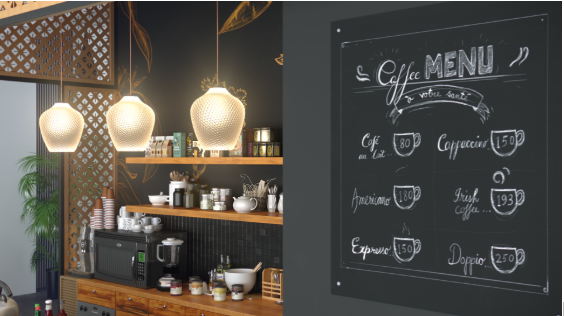
Retail spaces are among the most dynamic commercial environments. Every surface, from wall panels and product displays to counters and shelving, is exposed to constant interaction. Customers browse, touch, move, and revisit these areas throughout the day. Add to that the need for frequent cleaning, seasonal reconfigurations, and brand-led visual updates, and the pressure on interior materials becomes clear.
Designers and procurement teams face the challenge of finding solutions that are not only visually appealing but also durable, hygienic, and cost-efficient.
This is where Greenlam MFC stands out. With its combination of structural stability and surface performance, MFC offers a well-balanced solution for retail environments. Brands like Greenlam MFC have further refined the product by offering high-quality boards engineered for commercial use, available in a wide range of designs in select premium finishes to suit any retail concept.
Before selecting materials for your next retail fit-out or refurbishment, it’s important to understand how MFC works and why it is increasingly being chosen as the material of choice for modern retail design.
Melamine-faced chipboard (MFC) is a type of engineered wood product made by compressing wood particles into a dense board, then applying a decorative melamine-impregnated surface layer. This outer layer gives the board its colour, texture, and resistance to wear, moisture, and stains, making it both practical and visually consistent.
Unlike raw boards that require separate surfacing, prelam chipboards arrive pre-finished and ready for fabrication. This reduces manufacturing time and ensures a uniform finish across large-scale retail projects.
Why it works so well in retail spaces:
From shop counters and back-office storage to feature displays and product shelves, MFC furniture boards deliver durability and design flexibility in one easy-to-specify material.
Retail interiors experience constant stress, from daily footfall and product handling to frequent cleaning and seasonal redesigns. Choosing a material that can withstand these pressures without compromising on aesthetics is essential. MFC panels are designed for exactly this purpose.
Here are the key performance benefits that make melamine board for retail spaces a smart, long-term solution:
Store surfaces are subject to regular friction from merchandise, trolleys, and customer contact. The melamine surface on MFC is engineered to resist scratches and dents, maintaining its look over time even in high-traffic areas.
Spills and humidity are common in retail settings, especially in caf’s, grocery outlets, and beauty stores. MFC offers low moisture absorption, reducing the risk of swelling or delamination.
Retail shelves and counters need to look presentable at all times. The closed, non-porous surface of melamine-faced chipboard prevents stains from setting in and allows for quick, hassle-free cleaning.
Despite being lightweight and easy to work with, MFC furniture boards provide excellent screw-holding strength and dimensional stability. This makes them suitable for building modular shelving, drawer units, and tall vertical displays that must support weight consistently.
As a prelam chipboard, MFC requires no additional laminating, polishing, or surfacing, reducing production time and cost. It is compatible with CNC machining, edge banding, and modular joinery systems, which simplifies the installation process for fit-out contractors.
The combination of durability, practicality, and design compatibility makes chipboard for retail spaces an ideal material for demanding commercial environments.
In retail, visual impact is everything. The right display surface not only enhances product presentation but also reflects the store’s brand identity. With textured melamine board options available in a wide variety of designs, MFC panels allow designers to combine durability with style effortlessly.
Greenlam MFC offers two finish options:
These finishes maintain their appearance even under harsh lighting or frequent cleaning, which are key concerns in customer-facing zones.
Whether you’re designing a high-street fashion store or a tech showroom, there are melamine boards for retail spaces in both collections to match the tone of your space.
One of MFC’s strengths lies in its ability to create a unified look across different parts of a store. Designers can use the same decor for:
This level of coordination strengthens brand presence while keeping the material palette simple and efficient.
With its combination of surface resilience and visual variety, MFC furniture board brings both functionality and character to retail interiors, helping create spaces that support the customer experience as much as they showcase products.
The flexibility of MFC panels makes them suitable for a wide range of functions within retail interiors. Whether you’re fitting out a single store or managing a multi-location rollout, using a single material across diverse applications improves design cohesion and simplifies procurement.
Here’s where MFC for retail spaces offers clear value:
MFC boards serve as excellent vertical panels for creating branded zones or product category backdrops. Their decorative surface options and resistance to scuffing make them ideal for high-visibility areas.
Whether fixed or modular, shelving must support weight, resist scratches, and stay colour-fast under store lighting. MFC furniture boards meet all these criteria while offering a wide range of finishes that complement the merchandise.
From back-of-house storage to customer-facing display drawers, MFC works well due to its dimensional stability, screw-holding strength, and resistance to stains. These features are critical in retail environments where function meets visibility.
Point-of-sale areas are high-contact zones prone to wear and tear. MFC offers the right balance of aesthetic appeal and impact resistance. Using prelam chipboard in these zones also speeds up fabrication, helping retailers meet tight deadlines.
Even utility zones benefit from consistency in material and colour. MFC’s hygiene-friendly surface and design versatility make it suitable for wardrobe doors, partitions, lockers, and worktops in changing rooms or stockrooms.
By using laminated chipboard for retail spaces across these zones, designers and fit-out teams can ensure consistency in quality, finish, and performance, while keeping maintenance and installation simple.
Retail interiors are not only judged by how they look, but by how easily they come together; on time, within budget, and with long-term reliability. That’s where MFC panels offer clear commercial and technical advantages for everyone involved in the fit-out process.
Unlike raw boards that need additional surfacing, prelam chipboard comes factory-finished. This reduces material handling time, eliminates separate laminating steps, and ensures consistency across panels, especially important for multi-store branding.
MFC boards are compatible with modular hardware systems, CNC routing, and edge banding. Their uniform thickness and smooth surface make them easy to cut, drill, and assemble, helping installers meet tight project timelines with minimal on-site adjustments.
Behind the decorative surface lies a dense, high-quality Greenlam chipboard core. It offers excellent screw-holding capacity and structural integrity, making it suitable for shelving systems, tall units, and fixtures that support merchandise weight.
MFC offers a balanced cost-performance ratio. It allows retailers and designers to achieve a premium look using textured melamine board, without the higher costs associated with plywood and post-laminated materials.
For nationwide or multi-branch retail formats, MFC allows exact replication of finishes across locations. This ensures uniformity in brand presentation, simplifies material ordering, and reduces the risk of mismatched batches.
Whether you’re an architect specifying finishes or a procurement head managing fit-out packages, MFC for retail spaces simplifies decision-making by offering proven performance, aesthetic flexibility, and excellent value.
When specifying materials for retail interiors, performance on paper means little unless it is backed by proven quality, consistent availability, and responsible manufacturing. This is where Greenlam MFC stands apart.
Greenlam MFC panels are manufactured with precision-engineered chipboard cores, ensuring excellent density, structural stability, and screw-holding strength. Whether used for shelving, service counters, or storage units, Greenlam chipboard with laminated finish delivers long-term durability in demanding retail environments.
Not every retail environment demands the same level of moisture resistance, and material selection should reflect these variations. Greenlam MFC addresses this through three distinct grades, each aligned with specific usage conditions.
MFC Core is suited for dry applications such as display shelving and wall panelling, where exposure to moisture is minimal. For spaces that experience occasional humidity, MFC Core+ offers added resilience while maintaining surface consistency. In more demanding environments, MFC HMR (High Moisture Resistant) is designed to perform reliably in high-use or spill-prone areas, including cafe counters and beauty stations.
This graded approach enables designers to align material performance with application needs while maintaining cost efficiency.
Greenlam MFC’s Universal and Studio collections include a wide selection of solid colours, woodgrains, and abstract designs, available in Suede and Textured Matt finishes. This allows seamless coordination across visual zones, while offering variety for brand-specific requirements.
Low-emission boards and eco-friendly manufacturing processes reflect Greenlam’s commitment to environmental responsibility and indoor air quality, both critical factors in enclosed retail environments.
Whether your’e planning a flagship store or a rapid retail rollout, Greenlam MFC panels offer the consistency, adaptability, and design value that modern retail spaces demand.
Greenlam MFC is engineered to meet the evolving needs of commercial interiors, offering precision-manufactured melamine-faced chipboards built for performance and style. Designed to handle the everyday challenges of retail spaces, from product display to back-office storage, these panels combine structural stability with surface resilience and visual impact.
With multiple grades suited to different humidity levels, a wide variety of designs, and consistent quality across batches, Greenlam MFC gives designers and retailers the confidence to build spaces that look good and last long.
Available in both Universal and Studio collections, with finishes like Suede and Textured Matt, Greenlam MFC helps create cohesive and durable interiors tailored to brand experience.
To discuss your requirements, call us at 1800-833-0004, email us at info@greenlammfc.com, or visit our contact form
Prelam chipboard is a melamine-faced chipboard that comes factory-finished, eliminating the need for additional laminating. It ensures a consistent look across all panels and speeds up fabrication for retail projects.
MFC furniture boards are ideal for wall cladding, shelving, counters, storage units, and trial room partitions. Their durability and aesthetic range make them suitable for both front-of-house and back-of-house applications.
Greenlam prelam chipboard is engineered for commercial environments. It offers reliable screw-holding strength, moisture resistance, and surface durability, making it ideal for busy retail spaces.
Yes. Greenlam’s MFC HMR (High Moisture Resistant) grade is specifically designed for such applications, providing enhanced protection against swelling, staining, and delamination.
Greenlam MFC panels are available in Suede and Textured Matt finishes. These finishes offer visual appeal and surface protection, while fitting seamlessly into a variety of retail design themes.
Textured melamine board adds tactile and visual depth to surfaces, making retail displays more engaging. It also hides minor surface marks better than flat finishes.
Yes. The melamine surface is non-porous and stain-resistant, making it easy to clean and maintain, ideal for customer-facing retail zones.
This range allows designers to match the right grade to each retail zone.
You can explore options directly through Greenlam MFC’s website or connect with authorised melamine board suppliers and distributors who offer product support and customisation options.